Beginner's Guide to Surfing in Morocco
Morocco has become one of the world's most popular surf destinations—and for good reason. With year-round waves, a mild climate, and a coastline packed with beginner-friendly beaches, it's one of the best places to learn how to surf.
If you're thinking about booking your first surf trip, it's normal to have questions. Do you need experience? Do you need your own equipment? How difficult is surfing for beginners?
This beginner's guide to surfing in Morocco covers everything you need to know before your first session in the water.
Why Surfing in Morocco for Beginners Is Easier Than You Think
One of the biggest advantages of learning to surf in Morocco is variety.
Along the Atlantic coast, you'll find everything from gentle beach breaks ideal for complete beginners to powerful reef breaks for experienced surfers. This means surf instructors can choose spots that match the conditions and your level on any given day.
Areas like Mirleft, Taghazout, and Tamraght offer a combination of consistent waves, sandy-bottom beaches, and a relaxed surf culture that makes learning less intimidating.
For many people, Morocco becomes the place where they catch their first wave.

Do You Need Experience to Start Surfing?
Not at all.
Most people who join beginner surf lessons in Morocco have never stood on a surfboard before. A good instructor will guide you through the fundamentals step by step, including:
Ocean safety
Understanding waves
Paddling technique
Positioning on the board
How to pop up and stand
Basic surf etiquette
Your first goal isn't to surf perfectly—it's to become comfortable in the ocean and enjoy the learning process.
Do You Need to Be a Strong Swimmer?
You don't need to be an athlete, but basic swimming ability is important.
Beginner surf lessons are usually held in waist-deep or chest-deep water where instructors remain close by. However, being comfortable in the ocean helps you stay relaxed and confident throughout the session.
Surfing is often more about balance, timing, and persistence than physical strength.
What Equipment Do You Need?
The good news is that most surf schools and surf camps provide everything you need.
For your first surf lesson, equipment usually includes:
Soft-top beginner surfboard
Wetsuit
Surf leash
Professional instruction
All you typically need to bring is:
Swimwear
Towel
Sunscreen
Water bottle
Many beginners are surprised by how little equipment is required to get started.
What Happens During Your First Surf Lesson?
Every surf school has its own approach, but most beginner lessons follow a similar structure.
Beach Introduction
Before entering the water, your instructor will explain:
Ocean conditions
Safety rules
Surf etiquette
Board handling
Pop-up technique
You'll usually practice standing up on the sand before trying it in the water.
Time in the Water
Once you're comfortable, you'll move into small whitewater waves.
These waves have already broken, making them much easier and safer to learn on than unbroken green waves.
Your instructor will help position you correctly and often give the board a small push to help you catch your first waves.
Review and Feedback
After the session, instructors typically review your technique and offer tips for improvement.
Progress often comes from small adjustments repeated over time.
How Long Does It Take to Learn Surfing?
This is one of the most common questions beginners ask.
The honest answer is: it depends.
Most beginners can stand up and ride a small wave during their first few lessons. Developing strong paddling skills, reading waves, and catching waves independently takes longer.
Surfing isn't something you master in a week—but that's part of what makes it rewarding.
Each session builds confidence and understanding of the ocean.
Common Beginner Mistakes
Every surfer makes mistakes when starting out.
Some of the most common include:
Looking down instead of ahead
Standing up too quickly
Using a board that's too small
Trying to surf waves that are too large
Getting frustrated by slow progress
The key is patience.
Even experienced surfers were beginners once.
Surf Etiquette for Beginners
Learning how to behave in the lineup is just as important as learning how to ride a wave.
A few simple rules include:
Respect other surfers
Don't drop in on someone's wave
Wait your turn
Listen to local knowledge
Keep a safe distance from others
Good surf etiquette helps keep everyone safe and makes the experience more enjoyable.
Why Mirleft Is a Great Place to Learn
Compared to some of Morocco's busier surf destinations, Mirleft offers a slower pace and less crowded beaches.
The variety of nearby surf spots allows instructors to choose beginner-friendly conditions throughout the year, while the relaxed atmosphere makes it easy to focus on learning rather than competing for waves.
For many visitors, it's the combination of surfing, local culture, ocean views, and a welcoming community that makes Mirleft memorable.
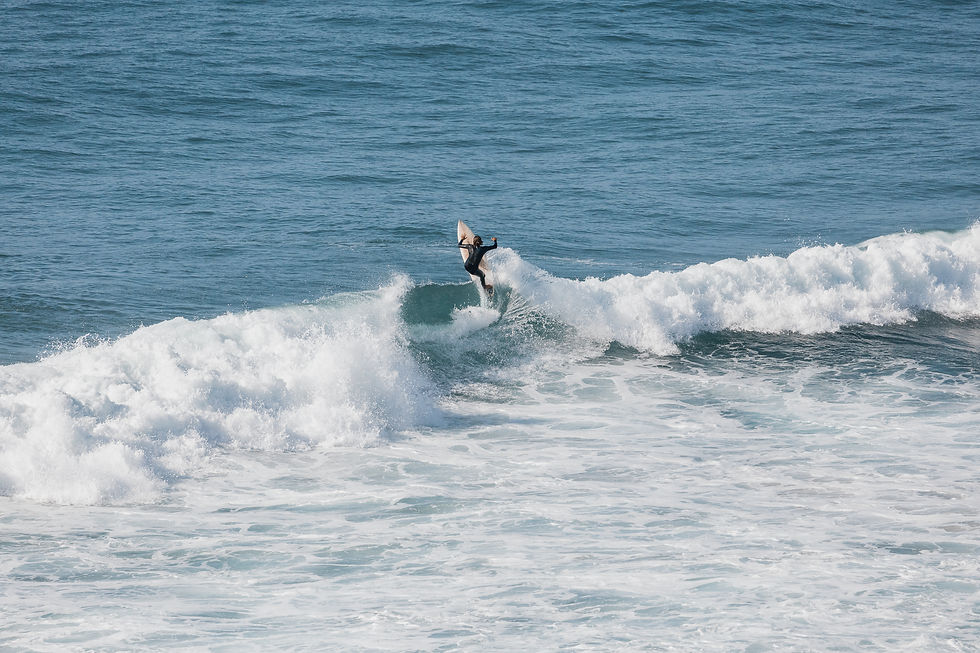
Beginner surfer learning to ride a wave during a surf lesson in Morocco
Ready to Catch Your First Wave?
Every experienced surfer started exactly where you are now.
Learning to surf isn't about being perfect—it's about spending time in the ocean, building confidence, and enjoying the process one wave at a time.
If you're ready to start your surfing journey, we'd love to welcome you to Mirleft for beginner-friendly surf lessons and small group coaching on Morocco's Atlantic coast.